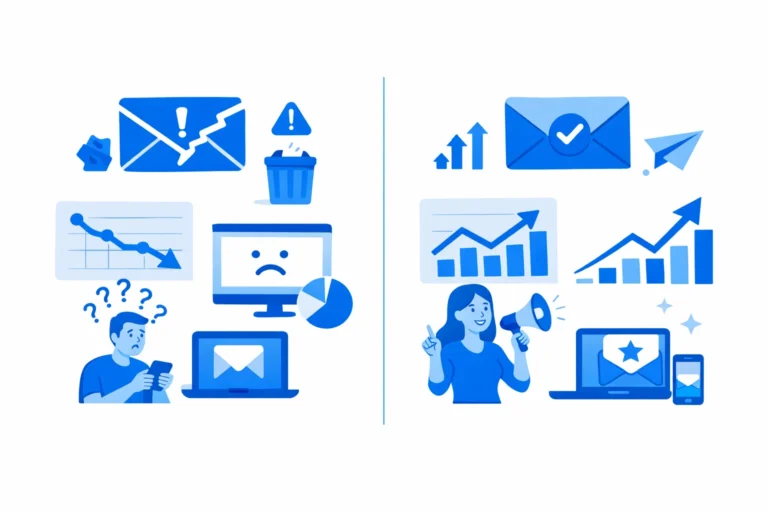

No matter how good your product or service is, if your emails are not opened, they don’t sell.
For most businesses, low open rates are the biggest email marketing challenge. The good news? Higher open rates are not about luck—they’re about strategy, consistency, and smart email campaign management.
In this guide, we’ll break down proven best practices that help businesses increase email open rates and get more visibility, engagement, and results from their campaigns in 2026.
What Is Email Campaign Management?
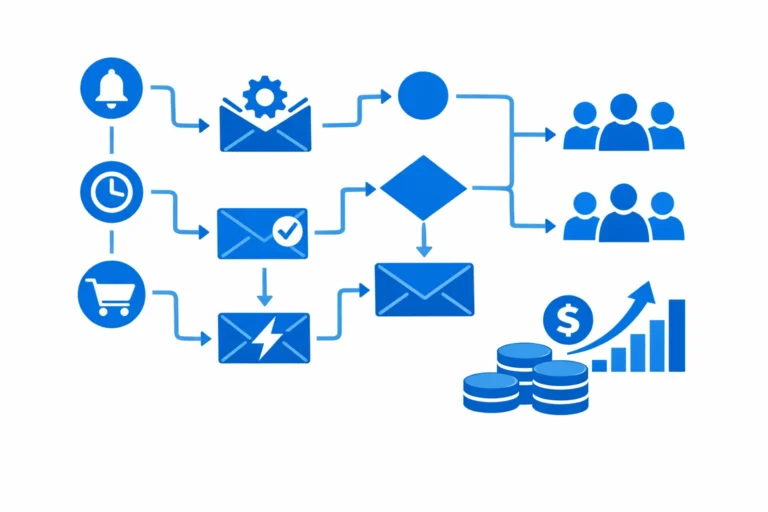
Email campaign management is the process of planning, creating, sending, tracking, and optimizing email campaigns to achieve specific goals—such as engagement, leads, or sales.
It includes:
- Strategy planning
- List segmentation
- Subject line optimization
- Scheduling and sending
- Performance tracking
When managed properly, email campaigns become a predictable growth channel instead of a hit-or-miss tactic.
Why Open Rates Matter So Much
Open rate tells you how many people actually see your message.
Low open rates usually mean:
- Weak subject lines
- Poor sender reputation
- Wrong timing
- Unengaged or low-quality lists
Higher open rates lead to:
- More clicks
- More conversions
- Better inbox placement
- Stronger brand trust
Open rates are the first gate to email marketing success.
Best Practice #1: Use a Recognizable Sender Name
People open emails from brands they recognize.
What Works Best:
- Use a real brand name
- Or a consistent person + brand combo
Example:
“Rahul from EmailMarketingRocket”
Avoid random or generic sender names. Consistency builds familiarity—and familiarity increases opens.
Best Practice #2: Write Subject Lines That Spark Curiosity (Not Clickbait)
Your subject line is the make-or-break factor for open rates.
High-Open-Rate Subject Line Tips:
- Keep it under 45 characters
- Focus on value, not hype
- Use curiosity naturally
- Avoid spammy words
Examples:
- “3 simple ways to improve email opens”
- “Most businesses ignore this email mistake”
Avoid misleading clickbait. Trust lost = opens lost.
Best Practice #3: Segment Your Email List (Very Important)
Sending the same email to everyone kills open rates.
Segmentation allows you to send the right message to the right audience.
Common Segmentation Ideas:
- New vs existing subscribers
- Active vs inactive users
- Purchase history
- Interests or behavior
Segmented campaigns consistently outperform bulk emails in open rates and engagement.
At EmailMarketingRocket, segmentation is a core part of campaign management for every client.
Best Practice #4: Send Emails at the Right Time
Timing directly impacts open rates.
While there’s no “perfect” time for everyone, testing shows:
- Weekdays usually perform better
- Early mornings and mid-day work well
- Consistency matters more than perfection
The key is to test and analyze your audience’s behavior, then stick to what works.
Best Practice #5: Clean Your Email List Regularly
A large list doesn’t mean a healthy list.
Inactive subscribers lower open rates and damage deliverability.
List Cleaning Includes:
- Removing hard bounces
- Identifying inactive users
- Running re-engagement campaigns
- Removing non-responsive contacts
A smaller, engaged list always outperforms a large, inactive one.
Best Practice #6: Use Preheader Text Smartly
Preheader text is the line users see after the subject line in the inbox.
Most businesses waste this space.
Smart Preheader Tips:
- Expand on the subject line
- Add context or curiosity
- Avoid repeating the subject
A strong preheader can significantly increase opens without changing the subject line.
Best Practice #7: Avoid Spam Triggers
Even great emails fail if they land in spam.
Avoid:
- ALL CAPS
- Too many exclamation marks
- Spammy phrases like “FREE!!!”
- Misleading subject lines
Good campaign management focuses on deliverability first, not just design.
Best Practice #8: Use A/B Testing to Improve Open Rates
A/B testing helps you understand what your audience prefers.
What You Can Test:
- Subject lines
- Sender names
- Send times
- Preview text
Even small improvements in open rates can lead to big long-term gains.
👉 Advanced A/B testing is included in our professional plans:
https://emailmarketingrocket.com/pricing/
Best Practice #9: Be Consistent, Not Random
Consistency builds anticipation.
If subscribers know when to expect your emails, they’re more likely to open them.
Consistency Means:
- Predictable frequency
- Similar tone and value
- Clear expectations
Random emails feel intrusive. Consistent emails feel welcome.
Best Practice #10: Analyze, Improve, Repeat
Email campaign management is not “set and forget.”
Track:
- Open rates
- Click-through rates
- Unsubscribes
- Engagement trends
Use data to refine:
- Subject lines
- Content style
- Timing
- Segmentation
This continuous optimization is how brands maintain high open rates long-term.
Should You Outsource Email Campaign Management?
Managing campaigns properly takes time, tools, and experience.
Businesses outsource email campaign management to:
- Improve open rates faster
- Avoid deliverability issues
- Save time
- Focus on growth
At EmailMarketingRocket, we manage end-to-end email campaigns designed to maximize opens, engagement, and results.
👉 Get a custom campaign strategy:
https://emailmarketingrocket.com/get-a-quote/
Final Thoughts
Higher open rates don’t come from tricks—they come from smart email campaign management.
When you focus on:
- Audience understanding
- Strong subject lines
- Segmentation
- Consistent optimization
Your emails stop getting ignored—and start driving real business results.
If you want expert help managing campaigns that actually get opened, we’re ready to help.
👉 Contact us here:
https://emailmarketingrocket.com/contact/